IN A NUTSHELL Author's NotePublic health is a public good and requires public trust to succeed. Public health is inherently political because the focus is on population health rather than on individual health. In this article, I will briefly write about the history of public health and will try to explain why the U.S.’s public health policies, particularly its vaccination policies, are deteriorating
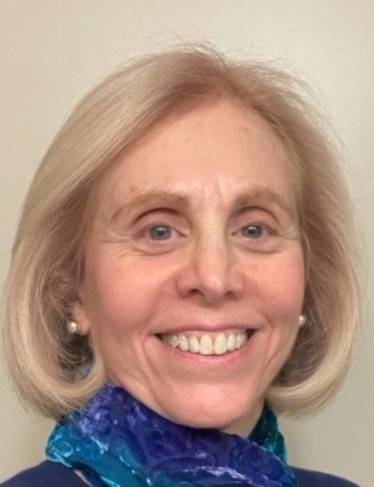
By Laura H. Kahn, MD, MPH, MPP
Co-Founder, One Health Initiative
By the same Author on PEAH: see HERE
The Fall of Public Trust and Public Health in the U.S.
Public health is a public good and requires public trust to succeed. Clean air, clean water, and sanitation are nonexcludable meaning that everyone can benefit from them. While public health’s advantages such as sanitation are obvious, their successful implementation in Western Europe and Northern America took over a century to achieve. Public health laws were passed, not because they benefited people’s lives, but because industries needed a healthy workforce to make money. To the detriment of many developing nations, basic public health services remain unavailable because government and industry leaders are not willing to invest in them.
Vaccines are another essential public good because of the herd immunity they provide against communicable diseases. Their success also requires public trust. I’ve written about the importance of vaccines. Unfortunately, opposition to vaccines has existed since the days of Dr. Edward Jenner. The British medical profession at that time supported the practice of variolation and was resistant to switching to vaccination. Anti-vaccinationists opposed vaccination for religious reasons believing that substances from God’s lower creatures were harmful. (They ignored the fact that they ingested food from God’s lower creatures every day).
Public health is inherently political because the focus is on population health rather than on individual health. For herd immunity (or Community Immunity Threshold) to be effective, particularly for highly communicable diseases such as measles, at least 92 to 94 percent of the population must be immune. Essentially, virtually all the population must be vaccinated against the disease. Vaccine mandates are required to achieve this level of coverage. For a variety of reasons, including misinformation about vaccines and misunderstanding of how immunity works, some people oppose getting vaccinated or getting their children or pets vaccinated. This lack of public trust jeopardizes public health’s goal of preventing disease. Prevention is preferable to treatment, which in some cases, is virtually impossible.
In this article, I will briefly write about the history of public health and will try to explain why the U.S.’s public health policies, particularly its vaccination policies, are deteriorating.
Public Health Beginnings
During the Middle Ages, epidemics were believed to be spread by miasmas, bad air, and caused by divine retribution for sinful behavior. This belief led to untold suffering and death.
Partly inspired by the American Revolution on the premise that “all men were created equal” the French Revolution caused tremendous social upheaval, creating fertile ground for improving public health. French scientists such as Drs. Louis-Rene Villerme (1782-1863) and Alexandre Parent Duchatelet (1790-1835) dedicated their careers to studying how society could improve people’s lives.
Impressed by the French efforts of social reform, Jeremy Bentham (1748-1832), an English utilitarian philosopher proposed Poor Laws to improve the lives of the poor, working class because he believed that everyone deserved a happy life without pain, not just the wealthy.
A devastating cholera outbreak that hit England from 1832 to 1848 led to the Public Health Act of 1848 that aimed to build sewers, remove waste, and provide fresh water. This act was largely ignored. Almost thirty years passed before the Public Health Act of 1875 resulted in the enforcement of the laws initially passed in 1848.
In the late 19th century, Louis Pasteur developed the rabies vaccine, the second vaccine to be developed after the smallpox vaccine. Pasteur realized that attenuated microbes could provide immunity against deadly diseases. His discovery paved the way for the field of immunology and for the development of other vaccines to prevent disease.
Public Health in the U.S.
The U.S. Constitution was written when medical practice was based on the Four Humors using lancets and leeches. At the time, physicians were more likely to kill their patients than to cure them. The germ theory of disease would not be discovered for another century. Not surprisingly, the right to a doctor was not included in the document.
In addition, disease outbreaks became primarily a state and local concern. This created a patchwork network across the country because each state and local government had its own rules and regulations. Public health funding was dependent upon state and local taxes and was chronically underfunded. (Americans don’t like paying taxes, so public health remains severely underfunded. Indeed, the country was founded largely in part because the colonialists refused to pay British taxes. “Taxation without representation is tyranny,” was a popular slogan.) The role of the federal government was to keep scourges outside the country and to provide support to state and local governments.
Each state developed its own vaccination policies. Traditionally, these policies have been developed using non-partisan, evidence-based federal recommendations. However, the Trump Administration appointed vaccine skeptic Robert F. Kennedy Jr. (RFK Jr.) as Secretary of Health and Human Services who fired the entire Advisory Committee on Immunization Practices (ACIP). Replacing them, he appointed vocal opponents to vaccine use in pregnancy.
They revised the ACIP recommendations which led the Centers for Disease Control and Prevention (CDC) to change their childhood vaccination schedule from 17 to 11 vaccines. In response, at least 20 states have announced that they will not adhere to these new guidelines.
Meanwhile, herd immunity has dropped low enough to result in vaccine-preventable disease outbreaks not seen in decades. Measles has become resurgent in many states.
Covid-19’s Impact on Public Trust in the U.S.
The U.S. had the 15th highest mortality rate and the highest total number of deaths (over 1 million) during the Covid-19 pandemic. President Trump oversaw the federal response to the rapidly spreading, deadly pandemic. His actions and inactions have been attributed to the excess deaths of hundreds of thousands of Americans.
A Cornell University study found that Trump was the largest source of misinformation such as recommending the use of hydroxychloroquine, bleach, and other “miracle cures” against the virus. He refused to wear a face mask in public and downplayed the severity of the disease. He scapegoated Asian-Americans by calling the coronavirus “kung flu” leading to a rise in hate crimes. The Covid origins controversy further fueled public distrust in science and the government.
The CDC issued contaminated testing kits which led to a loss in credibility and public confidence in the agency. Severe shortages in personal protective equipment including face masks jeopardized the lives of healthcare workers. Hospital budgeting to maximize profits did not factor in supply redundancies needed to respond to a pandemic. The spike in demand for supplies led to a system shock.
The rugged individualism of American culture made it deeply unsuitable for the collective action needed to respond to the pandemic. Many refused to wear face masks, citing infringement on personal liberties. Ethnic strife and entrenched racism contributed to further social discord. Lockdown rules seemed arbitrary and were deleterious for schools and businesses. Public health workers received hate mail and death threats because people didn’t like their policy recommendations. Up to 30 percent of the healthcare workforce retired, resigned, or left the field resulting in worsening shortages.
When the Covid-19 vaccine became available, many refused to get vaccinated. Watching Fox News contributed to a decline in willingness for vaccination.
The Second Trump Administration
For reasons outside the scope of this article, the US is now confronting a collapse in its federal leadership and government. Public trust is at an all-time low. Public health is deteriorating. The U.S. has withdrawn from the World Health Organization.
People are dying.
Unfamiliar with the perils of fascism, authoritarianism, and loss of human rights, the American public is slowly waking up as to why generations before them fought and died for justice, freedom, and liberty. Checks and balances, rights and laws are only adhered to if they are respected and enforced. The American experience should serve as a cautionary tale for democracies that elect individuals, such as convicted felons, who are unqualified to hold power. Collective insanity committing atrocities can happen anywhere given the right conditions.
(Author’s note: My book “Who’s in Charge? Leadership During Epidemics, Bioterror Attacks, and Other Public Health Crises,” published in 2020 (2nd edition) partly informed this article.