IN A NUTSHELL
Author's Note
 I’m sharing a short manifesto titled “We Have a Dream,” written in a collective voice and inspired, among other sources, by reflections and data presented in the SHEM webinars. It is a humble attempt to connect structural violence, health equity, and the need for life-centered alternatives.
I offer it simply as a contribution for reflection
I’m sharing a short manifesto titled “We Have a Dream,” written in a collective voice and inspired, among other sources, by reflections and data presented in the SHEM webinars. It is a humble attempt to connect structural violence, health equity, and the need for life-centered alternatives.
I offer it simply as a contribution for reflection
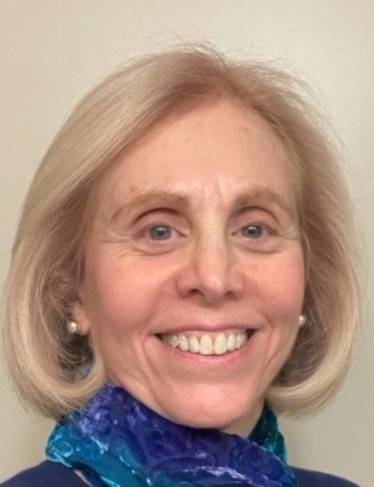
By Juan Garay
Co-Chair of the Sustainable Health Equity Movement (SHEM)
Professor/Researcher of Health Equity, Ethics and Metrics (Spain, Mexico, Cuba, Brazil)
Founder of Valyter Ecovillage (valyter.es)
By the same Author on PEAH: see HERE
WE HAVE A DREAM
We come together at a turning point in human history.
We speak not from comfort, but from urgency.
Not from hatred, but from responsibility.
Not as leaders or experts, but as people—
people who refuse to normalize suffering.
We live in a world governed by a global political system that too often bows to force instead of justice. A world where bullying threats replace dialogue, where international law bends before military and economic power, and where the United Nations Security Council—entrusted with peace—has repeatedly enabled wars, occupations, and genocides through action, inaction, and veto.
This is not a failure of ideals.
It is a failure of structures.
Alongside this political order stands an economic system that has escaped all democratic control. A system where gigantic asset managers concentrate wealth and power at an exponential pace, turning governments into administrators of market interests and reducing human beings to costs, risks, or data points.
This system rewards extraction over care, accumulation over life, and profit over truth. It is a global dictatorship of money, exercised by a few and endured by billions.
To sustain it, another form of domination expands quietly: the domination of attention. Through screens that occupy an ever-growing share of human time, media power increasingly shapes thoughts, fears, and desires. It trains passivity, accelerates individualism, and transforms citizens into isolated consumers—disconnected from land, community, and one another.
At the same time, unnatural borders fragment humanity and ecosystems alike, dividing what life itself has never divided. These borders justify exclusion, war, and exploitation, while masking the fact that the Earth is one, and our fate is shared.
From the highest global institutions to national governments; from academia to corporations; from economic bodies to religious hierarchies, a subtle but constant violence flows downward. The violence of command without listening. The violence of hierarchy without accountability. The violence of authority that normalizes obedience and silences dissent.
This structural violence is not abstract.
According to analyses presented in the SHEM webinars on sustainable health equity, the current global system causes the premature loss of approximately 16 million human lives every year, and the destruction of hundreds of millions of life-years—not through unavoidable fate, but through preventable inequality, deprivation, environmental degradation, and organized neglect.
At the same time, this system is destroying the living foundations of human existence—soil, water, climate, biodiversity—undermining the very possibility of human survival beyond this century.
Faced with this reality, despair would be understandable.
But despair would also be a surrender.
So we stand here to say: we have a dream.
We have a dream that humanity will remember that all life is sacred, and that humans are part of the web of life—not its owners, not its masters.
We have a dream of communities that regenerate ecosystems instead of exhausting them; that heal land and water instead of sacrificing them; that choose care for biodiversity as a condition for their own future.
We have a dream of ways of living rooted in compassion, where nourishment does not depend on systematic suffering, and where health is understood as relational—between bodies, communities, and ecosystems.
We have a dream of solidary self-sufficiency: communities that reclaim the essentials of life through simplicity, cooperation, and mutual support, reducing dependence on an alienating and destructive global market.
We have a dream of decision-making without domination—where power is shared, consent matters, and freedom is inseparable from responsibility. A world where hierarchies give way to participation, and wisdom emerges from collective intelligence.
We have a dream of coexistence grounded in empathy, where work, care, rest, affection, and healing are valued equally; where loneliness is not ignored; where violence is not normalized; where dignity is protected in everyday life.
And we have a dream of a global network of sovereign, interrelated communities—rooted in their territories, open to one another, sharing knowledge, seeds, and solidarity for the common good. A network that transcends borders without erasing diversity, and cooperation without domination.
This dream is not a fantasy postponed to tomorrow.
It is a direction already visible wherever people choose life over profit, cooperation over competition, and care over control.
With this dream, we refuse the idea that there is no alternative.
With this dream, we reject the lie that violence is inevitable.
With this dream, we commit ourselves—not to perfection, but to coherence.
Let this be the generation that chose life.
Let this be the moment when humanity changed course.
Let this be the time when people everywhere stood up and said: enough.
Enough of an economy that kills.
Enough of a politics that excludes.
Enough of a culture that numbs.
We have a dream—and we will live it into being.
People of the world standing against the violence of capitalism