IN A NUTSHELL Author's Note…These stories strengthen my commitment to creating spaces for deep dialogue—dialogues that transform grief into strength. My hope is to bring communities together, to heal historical wounds, to encourage reconciliation, and to rebuild trust in Eastern Kivu… …In countries where refugees from the region have fled, these same ethnic groups coexist peacefully because governance systems promote unity. This proves that leadership—not ethnicity—is the root of the problem…
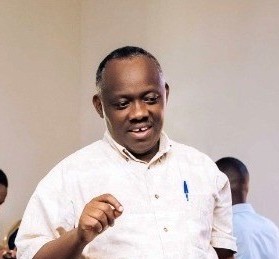
By Mr. Innocent Musore
Peacebuilder, Rwanda and the Great Lakes Region
By the same Author on PEAH: click HERE
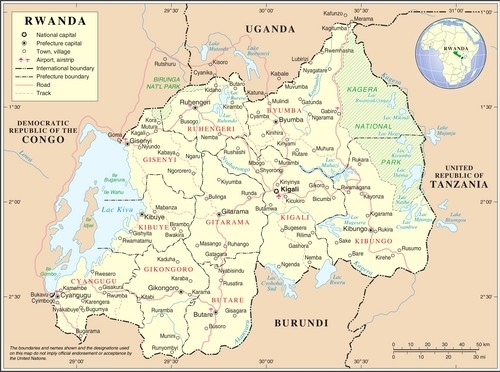 image credit: WikipediA
The Stories That Touched Me Deeply
I visited our elders who had fled to Uganda because of the war in eastern Congo. They were staying in Mbarara at the time. During our conversations, we spoke at length about the history of the suffering they endured. Even now, in their old age, they still carry the emotional and physical scars of those experiences.
They asked profound questions:
How can lasting peace be achieved? How can good governance be built so that peace becomes a reality?
A Story of Pain That Never Healed
One story touched me deeply. It was told by an elder who is now more than eighty years old. He said his father had been killed in 1964 by people from Kilumbi—members of his own Babembe (Ababembe) community—simply because he had a disability.
At the time, they were fleeing toward Baraka, where the United Nations had set up a presence. But before they could reach safety, neighbors from the Babembe ethnic group killed his father. This painful testimony was shared by Muzehe Pastor Semigomero Gratian.
As he recounted the story, tears filled his eyes. Decades have passed, yet the wounds remain open. His grief has only deepened, from 1964 when he first fled, until today in 2025—after a lifetime marked by displacement and suffer.
A Story from My Own Father
Another story that moved me even more is that of my own biological father, Reverend Pastor Philip Ruhimbya.
We were in a church service at the Free Methodist Church in Mbarara, a community with many Banyamulenge refugees. He asked for an opportunity to speak, and when he was given the chance, he began by saying:
“I thank God for keeping me alive. My brother came to visit me during my sickness, even after I suffered two strokes. I have seen God’s miracles in my life. These experiences are what move me and inspire my child to write.”
He then shared a story I had rarely heard in full.
Captured, Beaten, and Left for Dead in 1998
“God protected me in 1998 during what people call the RCD war,” he said. “I was captured in Likasi, in Katanga. They were hunting anyone who spoke Kinyarwanda or who was Tutsi. We tried to hide, but they caught us.”
Two soldiers arrested him and beat him severely. One wanted to kill him immediately; the other insisted they should take him alive to prison.
“One soldier fired his rifle at me and missed. He fired again three times. Then he stopped and beat me until I lost consciousness.”
When he woke up, they were dragging him toward the prison.
Inside, he met a man named Rucaca Felicien, a Kinyarwanda-speaking leader in the GECAMINI company, who had also been captured. Rucaca bribed the soldiers to take my father to the hospital.
A Narrow Escape from Execution
At the hospital, my father spent two days recovering from his injuries. But soon, soldiers began executing Kinyarwanda-speaking prisoners right inside the hospital.
“A doctor told me I could be executed if I returned to prison. He asked if I could go back. I told him, ‘No, I cannot. I am injured and weak.’ He said, ‘If they kill you, your blood will not be on my hands.’ Then he secretly arranged my escape”.
The doctor hid him in a van with covered windows and helped him flee.
My father survived, but many others did not, including the children of the cousin he had visited.
A Family History Marked by Massacre
My father also reminded us of what had happened earlier, in 1996, when five of his siblings were killed in Mboko. Some were burned alive. Others were thrown into the Rusizi River—never to be found, never to be buried.
This massacre has never been properly addressed, and the grief remains heavy.
My Vision Moving Forward
These stories strengthen my commitment to creating spaces for deep dialogue—dialogues that transform grief into strength. My hope is to bring communities together, to heal historical wounds, to encourage reconciliation, and to rebuild trust in Eastern Kivu.
We need systems that promote accountability, forgiveness, and policies that support the people of Kivu and the entire Great Lakes region. We must confront the long-term effects of colonialism, including the divisions created by the Berlin Conference of 1884.
I am not calling for the removal of borders. Rather, I believe borders should connect people instead of dividing them—because division harms all communities.
Learning from the Past
If people in the Great Lakes region—and the world—fail to learn from the Genocide against the Tutsi and the reconciliation process that followed in Rwanda, then history risks repeating itself.
“What will make Kivu better is recognizing our diversity of ethnic groups as an opportunity and a strength. These communities will never disappear. They will always live side by side. And even those who come later will one day need to live among others.”
In countries where refugees from the region have fled, these same ethnic groups coexist peacefully because governance systems promote unity. This proves that leadership—not ethnicity—is the root of the problem.
There will never be a world made up of only one ethnic group, one culture, only herders, or only farmers. Our future depends on learning to live together