IN A NUTSHELL Editor's notePEAH had the pleasure to interview Mr Francisco Mendina as a doctoral candidate at Western University in London, Ontario, Canada, who is conducting, under the supervision of Dr. Elysee Nouvet, a research study exploring how humanitarian healthcare professionals conceptualize and practice solidarity in contexts of crisis, conflict, and care. The study has received ethics approval from Western University, and in this capacity Mendina also serves as a staff member of the Global Health Solidarity Project Network as a Wellcome Trust funded research alliance implemented by the University of Ghana and led by Prof. Caesar Atuire at the University of Ghana and the University of Oxford, with six Co-Investigators in Australia, South Africa, Canada, Costa Rica, USA and Austria
By Daniele Dionisio
PEAH – Policies for Equitable Access to Health
INTERVIEW
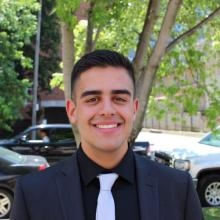
PhD Candidate Western University
Ontario, Canada
–PEAH: Very pleased to meet you Mr Mendina. Just to introduce yourself, share, please, concise information on your professional background
–Mendina: Hi Daniele, thank you for the warm invitation. I am pleased to meet you as well. I am currently a third-year PhD student in Health Information Science at Western University, where I also serve as a teaching assistant and graduate student fellow with the Global Health Solidarity Network. My research, supervised by Dr. Elysee Nouvet, aims to understand how humanitarian healthcare professionals who have worked in prolonged conflict settings understand and enact the concept of solidarity.
My path to this work has been shaped by a longstanding interest in community health and humanitarian contexts. During my undergraduate studies at McMaster University — where I completed a Bachelor’s degree in Life Sciences with a minor in Community Engagement — I began volunteering with global health and community health organizations, which sparked my interest in how health systems serve vulnerable and underserved populations. This interest deepened during my Master’s degree in Management of Applied Sciences in Global Health Systems at the University of Western Ontario, where an internship gave me firsthand exposure to the humanitarian healthcare space and affirmed my commitment to working at the intersection of health equity and community engagement.
Prior to beginning my doctoral studies, I worked as a Program Coordinator for HIV/AIDS Support Services at an AIDS Services Organization in York Region, Ontario. In this role, I oversaw project planning, individual case management, and health promotion initiatives, including organizing and leading community education workshops. Across these experiences — from undergraduate volunteering to professional coordination — I developed a deep appreciation for community-centred approaches to health, which continues to inform my doctoral research today.
–PEAH: As maintained in the Global Health Solidarity Project brief ‘…The Challenge Efforts to promote greater health equity for all have been accompanied by an increase in calls for solidarity, especially during crises such as the Covid-19 pandemic. However, at the global level, these appeals to solidarity have produced meagre results. Common conceptions of solidarity in global health are ambitious but ambiguous and under-theorised, making them inadequate and insufficient in providing the clear goals and tools needed to operationalise solidarity…’ In this connection, what are your thoughts in more detail?
–Mendina: The challenge resonates with what motivated my own research. In reviewing the humanitarian healthcare literature, I consistently found solidarity being called to have a more central role — particularly in calls for more horizontal, inclusive, and politically engaged humanitarian responses — yet rarely defined. Authors across disciplines conceptualize the term differently. Humanitarian organizations themselves use the term in varied and sometimes contradictory ways. The result is a concept that is rhetorically powerful but operationally vague.
Additionally, to my knowledge, there are no studies that have sought to understand how those actually working on the front lines of humanitarian healthcare — the people navigating these principles in real time, under real constraints — understand or enact solidarity. That gap is significant and urgent.
This urgency is compounded by the tensions solidarity introduces in practice. Some scholars have argued that solidarity implies political alignment or a challenge to structural injustice, thereby placing it in direct tension with the principle of neutrality — a foundational humanitarian commitment understood as essential to ensuring access to affected populations and the safety of frontline workers. If solidarity is being called upon to have a more central role in humanitarian healthcare, we need to understand what it actually means to those navigating these realities on the ground, and what the practical implications of different understandings might be for access, safety, and operational effectiveness. That is precisely the gap my research seeks to address.
–PEAH: Some in-depth information now concerning the Project objectives
–Mendina: This study aims to generate empirical knowledge about how humanitarian healthcare workers who have worked in prolonged conflict settings understand and enact solidarity.
The study is organized around two interconnected objectives. The first is to understand how frontline humanitarian healthcare workers construct and make sense of solidarity in relation to neutrality — a foundational humanitarian principle, and an increasingly contested one, that commits organizations to refrain from taking sides in conflict. This relationship matters because some scholars have positioned solidarity as in direct tension with neutrality.
The second objective is to examine how understandings of solidarity are enacted in practice: how they intersect with workers’ experiences of accessing populations, navigating questions of personnel safety, and managing the ethical demands of frontline work in complex emergencies.
Together, these objectives are designed to produce the kind of grounded, experience-near knowledge that is currently missing from the literature.
–PEAH: Relevantly, what about the Project approach?
–Mendina: The study takes an interpretive, qualitative approach. Data is collected through semi-structured interviews with humanitarian healthcare workers who have experience in prolonged conflict settings. These interviews are designed as open-ended conversations, allowing participants to speak to their experiences in their own terms rather than being guided toward predetermined definitions of solidarity or neutrality.
Methodologically, the study is grounded in an abductive logic of inquiry, which is well-suited to concepts like solidarity that are vague, contested, and differently understood across contexts. Rather than testing a fixed theory, the approach remains responsive to the tensions, contradictions, and surprises that emerge from participants’ accounts, allowing meaning to develop iteratively through engagement with the data. Analysis is conducted through reflexive thematic analysis, with attention to moral reasoning, ethical complexity, and the situated nature of participants’ experiences.
–PEAH: And as for the expected outcomes?
–Mendina: This study will contribute to a nuanced account of how solidarity in the eyes of Humanitarian Healthcare workers interacts with competing demands such as neutrality, safety, and access, and how it is enacted or contested in practice. Rather than assuming solidarity is inherently transformative, the study asks what it means, produces, and complicates. Findings will inform ethical frameworks, training, and organizational policy while contributing to broader academic conversations on humanitarian reform.
–PEAH: So compounded, your work contributes to ongoing debates around the role of neutrality and solidarity in humanitarian healthcare. Do you have anything to say about this?
–Mendina: Yes, exactly. It is a timely project, and it has been energizing to receive positive comments about the topic and project as a whole. The interviews have been incredibly engaging and I am excited for the next steps of the project and the ongoing conversations about solidarity in the humanitarian healthcare space.
–PEAH: How much progress has made your research so far?
–Mendina: At the time of this interview, we have conducted 14 semi-structured interviews.
–PEAH: And what would you need to better support the Project?
–Mendina: The opportunity this interview provides is itself a meaningful form of support, and I am grateful for it. At this stage, one of the most valuable things for the project is visibility, reaching humanitarian healthcare professionals who may be willing to share their experiences, and broader audiences who care about the future of humanitarian action. If readers of PEAH are working in or connected to the humanitarian healthcare space, I would warmly welcome the conversation.
–PEAH: In the interest of a wider audience, would you be happy to share information on the project research in French or Spanish language as well upon request?
–Mendina: I am happy to share more information and speak about this project with folks who are interested. For those who may want to connect with me on linked in, it is: www.linkedin.com/in/francisco-mendina
–PEAH: Thank you Mr Mendina for your exhaustive answers and very deserving humanitarian commitment
Readers are invited to comment on the content and suggestions of this interview