IN A NUTSHELL Author's Note…The Basic Health Service Package-BHSP represents a critical policy innovation for translating health insurance coverage into effective Universal Health Coverage-UHC in Vietnam. However, its success depends on the alignment of financing mechanisms, service delivery capacity, and governance systems. Strengthening Primary Healthcare through sustained investment, improved coordination, and enhanced service quality is essential to fully realize the potential of the BHSP and achieve equitable and sustainable UHC…

By Tham Chi Dung, MD., PhD.
Advisor | Health Systems, Financing & Policy | Vaccine Strategy & Immunization Systems
Hanoi city, Vietnam
The Basic Health Service Package in Vietnam: A Strategic Instrument for Universal Health Coverage and Primary Healthcare Strengthening
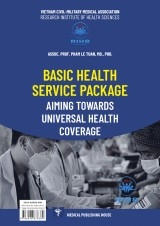 To learn more: https://www.researchgate.net/publication/403758124_BASIC_HEALTH_SERVICE_PACKAGE_AIMING_TOWARDS_TO_UNIVERSAL_HEALTH_COVERAGE
The development of the Basic Health Service Package (BHSP) in Vietnam reflects a strategic response to a fundamental challenge in achieving Universal Health Coverage (UHC): the disconnect between high levels of health insurance coverage and effective access to essential health services. While Vietnam has achieved near-universal population coverage through social health insurance, gaps persist in service utilization, quality of care, and financial protection, particularly at the primary healthcare (PHC) level (World Bank, 2023; World Health Organization & World Bank, 2023).
The BHSP was introduced as a policy instrument to operationalize UHC by defining a standardized set of essential services and medicines to be delivered at grassroots health facilities. Institutionalized through Circular No. 39/2017/TT-BYT, the package specifies technical services, essential medicines, and preventive interventions to be provided at commune health stations. It integrates two complementary financing streams: curative services financed by social health insurance and preventive services supported by the state budget (Ministry of Health, 2017; Pham et al., 2026). This dual financing approach reflects the need to align individual healthcare services with population health functions.
The rationale for the BHSP is grounded in systemic inefficiencies within Vietnam’s health system. Historically, healthcare utilization has been concentrated at higher-level hospitals, leading to overcrowding, inefficiencies in resource allocation, and increased out-of-pocket expenditure. At the same time, PHC facilities have been underutilized due to fragmented service delivery, uneven capacity, and limited public trust. The BHSP was therefore designed to standardize service provision, strengthen PHC as the first point of contact, and improve continuity of care, particularly for chronic disease management (Pham et al., 2026; World Health Organization, 2014).
The BHSP contributes directly to the three dimensions of the UHC framework: population coverage, service coverage, and financial protection. By defining essential services at the primary care level, it shifts the focus of UHC from insurance enrolment to effective service delivery. It also enhances financial protection by linking insured services with reimbursement mechanisms while maintaining publicly funded preventive services (World Health Organization & World Bank, 2023). In doing so, the BHSP supports PHC strengthening by promoting service decentralization, integrated care, and community-based service delivery.
The primary beneficiaries of the BHSP include rural populations, older adults, and individuals with noncommunicable diseases, who require continuous and accessible care. By bringing services closer to communities, the BHSP has the potential to reduce geographic and financial barriers to care and improve health system equity.
Despite these advances, significant implementation gaps remain. Service readiness at the primary care level is uneven, with persistent shortages in workforce capacity, diagnostic infrastructure, and essential medicine availability. These constraints limit the ability of commune health stations to deliver the full scope of the BHSP. In addition, patient bypass of primary care facilities continues, driven by perceived differences in quality and weak referral mechanisms, resulting in inefficiencies and overcrowding at higher-level hospitals (World Bank, 2020). Governance fragmentation between regulatory and financing institutions further complicates implementation, reducing coordination and accountability.
In conclusion, the BHSP represents a critical policy innovation for translating health insurance coverage into effective UHC in Vietnam. However, its success depends on the alignment of financing mechanisms, service delivery capacity, and governance systems. Strengthening PHC through sustained investment, improved coordination, and enhanced service quality is essential to fully realize the potential of the BHSP and achieve equitable and sustainable UHC.
References
- Ministry of Health of Vietnam. (2017). Circular No. 39/2017/TT-BYT on the basic health service package. Available from: Circular 39/2017/TT-BYT
- Pham, L. T., Phung, D. C., Tham, C. D., et al. (2026). The Basic Health Service Package: towards universal health coverage in Vietnam. Hanoi: Medical Publishing House. Available from: BHSP textbook (2026)
- World Bank. (2023). Health financing system assessment in Vietnam: toward universal health coverage. Washington, DC: World Bank. Available from: World Bank report 2023
- World Health Organization. (2014). Monitoring universal health coverage: priorities for the post-2015 development agenda. Geneva: WHO. Available from: WHO UHC monitoring (2014)
- World Health Organization, & World Bank. (2023). Tracking universal health coverage: 2023 global monitoring report. Geneva: WHO. Available from: UHC global monitoring report 2023