IN A NUTSHELL Author's Note…Organizational accountability starts with how a system treats its most vulnerable members—even when those members are the doctors themselves… A deeply personal experience here of Indian corporate healthcare system failure by a story that reveals the fragility of health systems when one of their own professionals becomes the patient
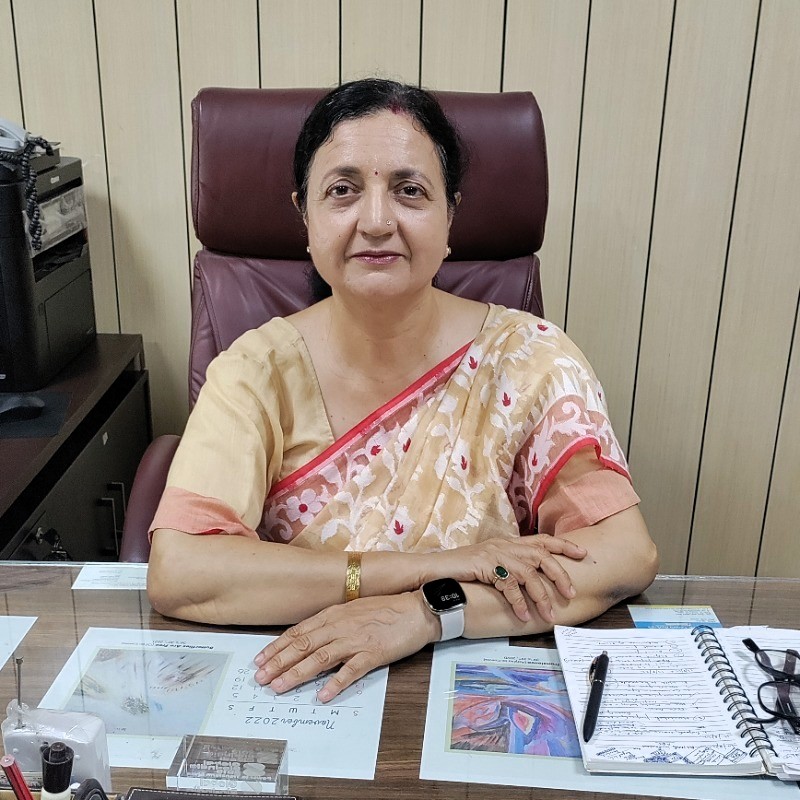
MD (AIIMS), MBA (HCA, FMS, DU)
Ex -Director Professor and HOD Community Medicine (DU)
& Ex -Dean, Maulana Azad Medical College
BSZ Marg, New Delhi 110002
State Operation Research Chairperson, NTEP, GNCT Delhi, India
After the Stroke: Why Health Systems Fail Their Own Doctors
The two-day intense deliberation in Lucknow on “Enhancing medical colleges role in TB elimination in India” concluded on 19 November 2015 and I took the flight back to Delhi hoping for a good restful night at home. The moment I entered home – the phone rang, i took the call and it shattered my world: my 49-year-old brother, an orthopaedic surgeon, had suffered a stroke and was being taken to the nearest hospital.
As I rushed through traffic, my mind was a blur of clinical protocols—the “golden hour,” rising stroke incidence rate in India, the immediate logistics of emergency care and our public health systems efforts — prevention, caregiving, rehabilitation — racing through my mind.
Praying hard and thinking of ways to break the news to my aged parents I reached the hospital. In the years since, that personal crisis has evolved into a stark exposure of a global systemic failure. It is a story that reveals the fragility of health systems when one of their own professionals becomes the patient.
When the Healer Needs Healing
My brother was a rising star in the corporate hospital circuit in Delhi NCR, the capital of India. Trained in both India and the UK, GMC (General Medical Council)-registered, and a recognized mentor in postgraduate programs, he possessed a wealth of clinical wisdom.
However, the moment he lost power in his left side, his professional identity was stripped away. The systems he dedicated his life to offered no safety net. The corporate hospital where he worked so diligently and generated revenue, valued only his ability to operate. His decades of teaching experience and sharp clinical reasoning were deemed “non-revenue generating.” The corporate hospital gave him the proverbial cold shoulder.
The health Insurance covered the month-long acute care; the long-term costs of rehabilitation were crushing. In a cruel twist, his wife an oncologist decided to get his scalp flap reconstruction done a year later at the corporate hospital where she was employed. The health insurance claim was denied and she was not given any concession by her hospital.
They had to pay the entire amount out of pocket – treated as strangers rather than family.
They decided to go back to UK after two years – but there was no support from the system there also. Having practiced outside the UK for a period, he found the NHS pathways for returning to practice inaccessible, though the system did provide essential medical cover for his complications—a relief the Indian insurance market refused to offer.
Despite a sharp memory and intact skills, his physical disability rendered him invisible. Globally we count stroke survivors in burden of disease studies. We don’t count doctor survivors- trained specialists who could still teach, assess, write medico legal reports, guide policy.
The Policy-Implementation Gap
For 11 years, I have watched a highly skilled surgeon fall through the cracks of well-intentioned but poorly executed policies. This isn’t just one family’s struggle; it is a diagnostic report on a broken global health workforce strategy.
The Legislation that could not help: India’s Rights of Persons with Disabilities Act (2016) exists on paper, but provides virtually no framework for the “reasonable accommodation” of medical professionals in the private sector.The return to the High income country could not help as the UK’s Supported Return to Practice (SRtP) , lacks the flexibility to support those navigating complex cross-border return or long-term recovery.
The Indian corporate health sector has a “Clinical Value” Myth. In Low- and Middle-Income Countries (LMICs) the rapidly expanding corporate health model equates “fitness” with “procedural volume,” ignoring the immense value of physician-led auditing, mentoring, and policy-making.
What Global Health Loses
There remains a profound disparity in stroke incidence and outcomes between relatively poor and rich countries. In LMIC countries, the incidence of stroke has more than doubled in the last 4 decades while in HIC countries it has declined by 42%. Many of those affected in the LMIC countries would possibly be health workers. These countries face a shortage of health manpower and therefore cannot afford to lose experienced clinicians.
My brother cannot move his left arm and hand, but his mind is a repository of expertise. He could be – Reviewing complex trauma cases for legal/medical audits, mentoring residents in clinical reasoning, advising on hospital accessibility and patient safety, analysing MRI over-utilization to reduce healthcare waste and many other healthcare related activities.
Three Essential Shifts for Organizational Accountability
To stop the “double loss” of skilled professionals (once to illness, then to neglect), we must advocate for three systemic changes in LMIC countries:
1. Adaptive Return-to-Practice Pathways
We must adapt models like the GMC’s SRtP for LMIC contexts. Health systems must create “soft landing” roles in telemedicine, quality improvement, and education that don’t require long hours on one’s feet in an OR.
2. Radical Inclusion in Workforce Planning
The Human Resource management in Health care services in LMIC countries needs to have a specific section on rehabilitation of disabled health care workers. The system must also track how many doctors and nurses who acquire a disability are successfully reintegrated into the system?
3. Redefining “Fitness to Practice”
“Fitness” should mean being safe and effective for a defined, specific role, not the ability to perform every possible physical task. Diversity in the workforce—including physical diversity—improves patient empathy and system resilience.
The Human Cost of Silence
Eleven years later, my brother sits at home. He is still a trained surgeon. He still possesses a wealth of knowledge. But because the system saw only a “disabled body” rather than an “expert mind,” he remains sidelined. The impact on our family has been devastating—mentally, emotionally, and financially. It raises a haunting question for every clinician: If a doctor or nurse employed by a corporate hospital becomes a patient, would the hospital recognize his / her value, or would he/ she be discarded?
Organizational accountability starts with how a system treats its most vulnerable members—even when those members are the doctors themselves. It is time we stop losing our healers to the very systems they helped build.