IN A NUTSHELL Author's NoteThis piece examines the impact of armed conflict on Sudan’s health system using the WHO health system building blocks framework, with reflections on global health equity and decolonization

By Khlood Fathi
MD | Public Health & Preventive Medicine Resident
Sudan
Conflict, Decolonization, and the Collapse of Health Systems
Reflections from Sudan
We live in an era marked by an increasing number of armed conflicts, disproportionately affecting countries in the Global South. While calls for the “decolonization of global health” have grown louder in academic and policy spaces, these calls often remain rhetorical rather than transformative. Too often, conflict is framed as an inevitable characteristic of previously colonized, resource-rich countries, obscuring the political and economic forces that sustain instability. The “resource curse,” exemplified by countries such as the Democratic Republic of Congo, continues to shape global health inequities. Sudan is no exception.
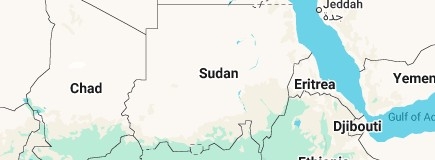
Sudan, the third-largest country in Africa and rich in natural resources, including gold, has a long history of political instability. In April 2023, a devastating armed conflict erupted in the capital, Khartoum, and rapidly spread to multiple states. The consequences have been catastrophic: Sudan is now facing one of the largest humanitarian crises in recent history, with over 10 million internally displaced people and more than half of the population in need of humanitarian assistance. Among the most severely affected sectors is the health system, which has experienced widespread destruction and institutional disintegration, including the effective collapse of the Ministry of Health.
This article examines the impact of the conflict on Sudan’s health system using the World Health Organization’s six health system building blocks: service delivery, health workforce, health information systems, medical products and technologies, financing, and leadership and governance.
Service delivery has been profoundly disrupted. Health facilities, particularly hospitals, have been attacked, looted, or rendered nonfunctional. Insecurity has prevented both healthcare providers and patients from accessing services. The destruction of infrastructure in the capital—historically the logistical and administrative hub of the country—led to the loss of drug warehouses and vaccine stocks, resulting in severe shortages of both curative and preventive services. As supply routes were diverted away from conflict zones, delivery times for essential health commodities increased substantially.
The health workforce has also been heavily affected. Large-scale displacement included healthcare workers, many of whom fled to safer states or left the country altogether in search of security and economic stability, accelerating an already critical brain drain. While some displaced health professionals were absorbed into state-level health systems, often without formal integration or training, the relocation of highly skilled personnel from the capital paradoxically contributed to capacity-building in some peripheral states through informal mentorship and technical support.
Health information systems, a cornerstone of effective public health response, proved highly vulnerable to conflict. Attacks on telecommunications infrastructure caused prolonged nationwide internet outages, severely disrupting routine reporting to central digital platforms. These challenges were compounded by electricity shortages, destruction or theft of hardware, and the displacement of trained data personnel, resulting in major gaps in health surveillance and decision-making.
Access to medical products and technologies, already constrained before the conflict due to longstanding international sanctions, deteriorated further. Medical equipment was destroyed or stolen, maintenance and quality assurance became nearly impossible, and supply chains were severely disrupted. The relocation of central medical stores to other states extended procurement routes, while the destruction of local pharmaceutical manufacturing facilities further undermined the availability of essential medicines.
Health financing in conflict settings is often deprioritized in favor of defense and security spending. In Sudan, resource reallocation significantly reduced public funding for health, increasing dependence on non-governmental organizations. However, insecurity and instability led many NGOs to suspend or withdraw funding, a situation exacerbated by global aid cuts and shifting donor priorities toward more stable contexts.
Finally, leadership and governance were weakened by widespread staff displacement, high turnover, and institutional fragmentation. Yet, the forced decentralization of health governance also produced unintended consequences. As state ministries of health assumed greater responsibility for managing services and resources, a form of de facto decentralization emerged, revealing both the resilience and the limitations of subnational governance in crisis settings.
Conclusion
Sudan’s experience illustrates how armed conflict systematically dismantles health systems, deepening existing inequities and exposing the fragility of institutions in resource-rich but politically marginalized countries. Framing such crises as local or inevitable obscures the global political and economic dynamics that sustain them. Genuine decolonization of global health requires moving beyond rhetoric toward accountability, equitable financing, and sustained investment in national systems, especially in conflict-affected settings.